 Find Your Store
Best Wood for Cottage Builds in Canada: Siding, Decks, & Interiors

You open your cabin in spring, and you notice that a board has shifted while the deck looks rougher than you remembered. Something in the mudroom feels damp. A finish that looked great last August now looks tired and worn.
Whether it is Muskoka, the Shuswap, or the Maritimes, the right wood has to survive the off-season.
A seasonal property is not living in stable, heated, year-round conditions. It may sit closed for months, deal with waterfront moisture, swing through big temperature changes, and then get used hard once everyone finally shows up with coolers, towels, dogs, and too much gear.
If Holmes on Homes taught people anything, it is that good-looking work only stays good-looking if the materials and assemblies actually suit the conditions. Cottage building is basically that lesson with more lake water, more freeze-thaw, and more opening-weekend surprises.
What Makes Cottage Wood Different From Standard Home Builds
Seasonal Temperature Swings And Wood Movement
Wood moves as its moisture content changes. In a seasonal cottage, that movement is usually more noticeable because the building is not held in a steady indoor condition year-round. The NRC explains that wood shrinks almost in direct proportion to moisture loss below fibre saturation. That dimensional change happens mainly across the width or thickness, not the length.
This matters for panelling, trim, built-ins, and even cabinet doors. In a cottage, the question is not whether wood will move. It is how gracefully the material and profile handle that movement.
Waterfront Moisture And Drying Conditions
Moisture management and drying potential are central to durability in wood construction. When assemblies do not shed water well or cannot dry properly, the odds of decay and finish failure go up.
That is why cottage wood selection is not only about species. It is also about where the material is being used, how exposed it is, and whether the detail lets it dry.
Long Periods Of Low Ventilation
A house that is occupied every day and ventilated regularly is one thing. A cottage that sits closed for months is another. Efficient ventilation helps reduce pollutant and moisture levels that can lead to poor comfort and indoor air quality issues. That makes finish choice, storage design, and seasonal reopening conditions more important in cottages than people sometimes expect.
Distance From Supply And Maintenance Reality
If your cottage is a long drive away, the best material is often the one that asks for fewer emergency trips, fewer touch-ups, and fewer long weekends lost to maintenance. The smart choice is not always the cheapest board on day one. It is often the one that still feels like a good decision in year five.
Quick Guide: Choosing The Right Wood For Common Cottage Applications
| Application | Best-fit material | Why it works |
|---|---|---|
| Dock framing and structure | Correctly specified pressure-treated wood | Built for wet exposure when the treatment category matches the use case |
| Cottage siding | Cedar | Naturally durable, dimensionally stable, and visually right for lake settings |
| Budget-friendly deck | Pressure-treated wood | Lower upfront cost and easy availability |
| Main social deck with low maintenance priority | Composite | Lower upkeep over time |
| Interior walls and ceilings | Knotty pine, shiplap, or ceiling board | Warm look and more forgiving visually when seasonal movement happens |
| Storage closets and gear spaces | Cedar | Naturally resistant to insects and well suited to storage applications |
| Cabinet boxes and built-ins | Baltic birch plywood | Void-free, stable, and strong at edges |
| Statement furniture and shelving | Live-edge wood | Ties the interior back to the setting naturally |
Best Wood For Cottage Exteriors: Siding, Decks, And Docks

Siding: Cedar VS Treated Wood
-
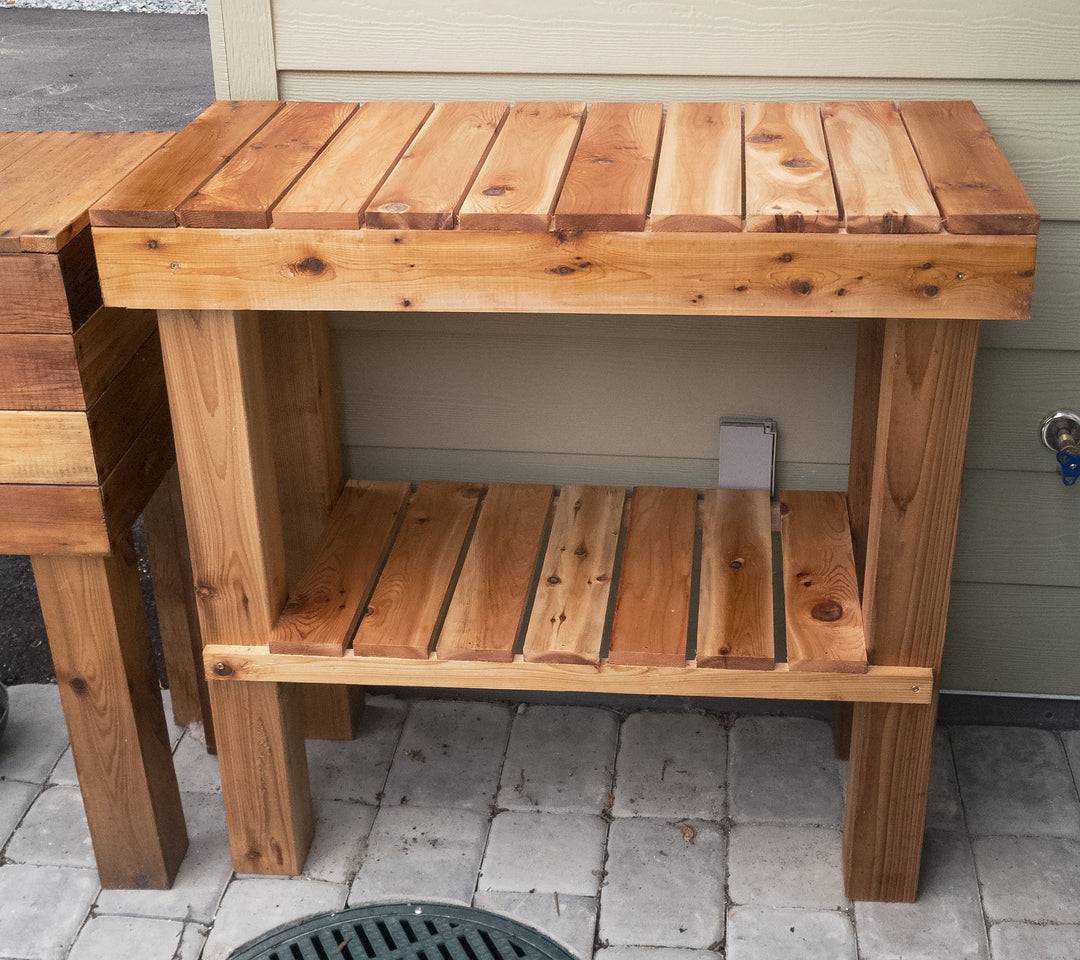
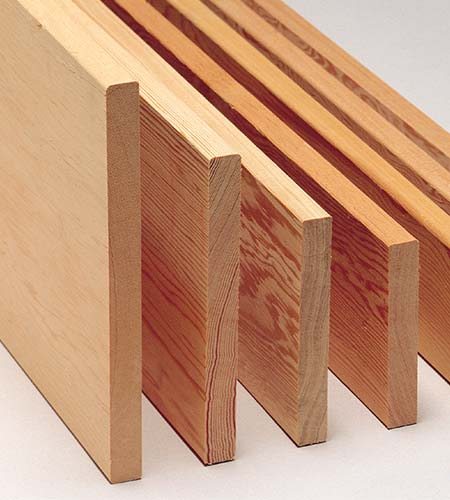
Cedar remains one of the strongest siding choices for cottages. Western Red Cedar is widely recognized for its natural resistance to decay and insects, and for its low shrinkage and good dimensional stability. Windsor also positions cedar as especially well-suited to Canadian climates and to projects like siding, decking, fencing, and panelling.
That makes cedar a very strong fit for classic cottage exteriors in places like Muskoka or Haliburton, where the goal is usually warmth, texture, and a material that still looks right against trees, rock, and water.
- Pressure-treated wood has a different role. It is often the better answer for exposed utility structures, budget-first builds, or places where durability matters more than refinement. The Canadian Wood Council\'s guidance on CSA O80 makes clear that treated wood should be chosen based on the exposure condition, not treated as one generic category.
Regional Note: In higher wildfire-risk areas such as parts of the BC Interior, ignition-resistant exterior design choices and more resilient assemblies are recommended. That does not mean wood has no place there, but it does mean exterior strategy should not be based on cottage aesthetics alone.
Decking: Choose Based On Maintenance Tolerance, Not Just Price
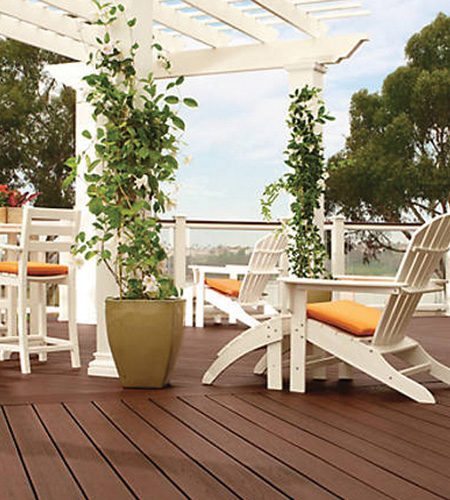
Decking at a cottage takes a fairly Canadian kind of beating. It sits wet in spring, bakes in summer, then spends the off-season under snow, debris, and long periods of low use.
- Pressure-treated decking is still the practical baseline for many cottages because it gets the job done at the lowest upfront cost. The tradeoff is maintenance and movement over time. Cedar decking looks and feels more refined, but it is still a maintenance choice, not a maintenance-free one. Real Cedar\'s finishing guidance makes clear that finish longevity depends heavily on exposure and product type.
- Composite deserves a mention here too, even in a wood-led article, because ownership style matters. If the deck is the main outdoor living zone and the owners would rather use it than fuss over it, composite can be the better lifestyle fit.
This is the actual decision point: are you building a deck you want to maintain, or a deck you mostly want to use?
Dock construction: treatment category matters more than people think
For freshwater docks, pressure-treated wood is the standard structural choice when the treatment level matches the exposure. The core point is not just "use treated wood." It is "use treated wood rated for the condition." The Canadian Wood Council's CSA O80 guidance exists for exactly this reason.
Fasteners matter too. In persistently wet conditions, corrosion resistance is not a detail you sort out later. It is part of getting the dock right.
Marine Plywood is not the default dock answer. It is more accurate to use it as a specialty panel solution where a high-quality exterior panel is actually needed, not as a replacement for properly specified structural treated lumber.
Best Wood For Cottage Interiors: Panelling, Ceilings, And Storage
Knotty Pine Vs Shiplap For Cottage Walls
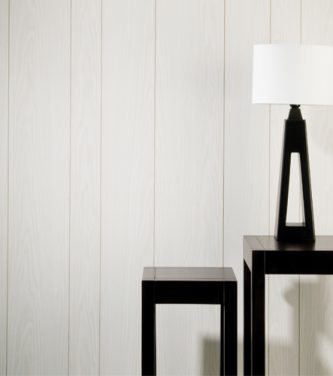
Knotty pine is still one of the clearest “this feels like a cottage” materials around. It has warmth, familiarity, and a visual softness that works well in lake spaces. Windsor's panelling range supports both that traditional direction and cleaner options such as shiplap and wainscot.
Shiplap is the better fit if the project wants to feel more updated without losing the wood-forward cottage look. It still reads naturally, but with a cleaner line.
The technical side matters here, too. Because seasonal movement is real, wall and ceiling materials that visually absorb small changes tend to age more gracefully in cottages than ultra-precise interior treatments that telegraph every shift. That is one reason panelling tends to make more sense in seasonal buildings than fussier finishes.
Ceiling Boards And Exposed-Beam Spaces
Ceiling board adds warmth overhead, helps visually finish exposed-beam spaces, and can soften the look of a room in a way drywall often does not. Windsor's ceiling board category specifically positions these products as a way to add texture and improve the feel of a room.
If the cottage has exposed rafters or a vaulted lake room, this is one of the easiest places to make the whole building feel more intentional.
Cedar For Closets And Seasonal Storage
Seasonal properties store things that are damp, packed away, or only used part of the year. Cedar remains a smart choice for storage areas because it is naturally durable, aromatic, and traditionally valued for insect resistance. Windsor positions cedar for both indoor and outdoor projects, including panelling and furniture, which fits this use well.
This is one of those practical decisions that also happens to feel a bit luxurious.
Best wood for cottage furniture, built-ins, and cabinetry

When To Use Live Edge Wood
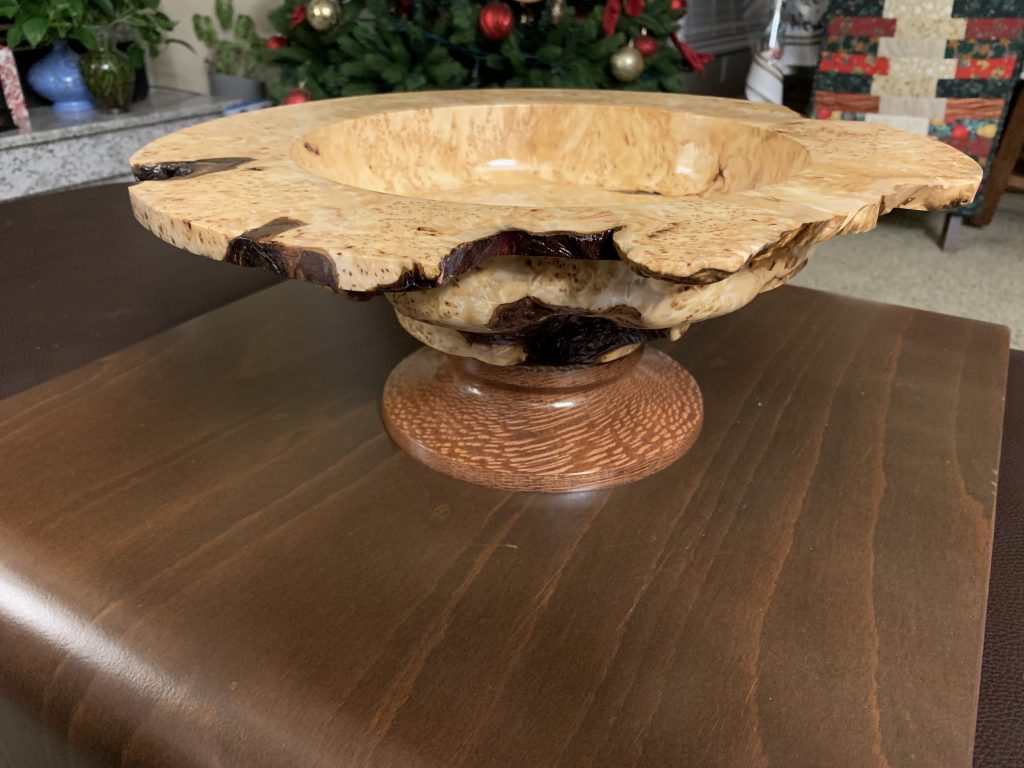
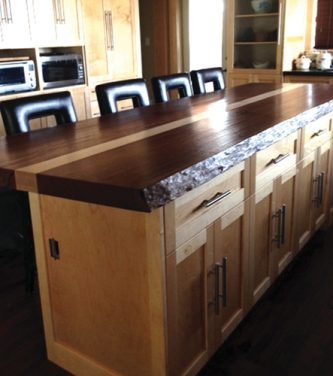
Live edge works best when it is treated as a focal point, not wallpaper. Windsor's live edge collection is aimed at tables, mantels, shelving, counters, and custom statement pieces, which is exactly where it makes sense in a cottage.
A live-edge dining table or shelf can feel rooted in the setting without making the whole interior look like it is trying too hard.
Hardwood Vs Softwood For High-Use Surfaces
For high-use surfaces such as counters, tabletops, and hardworking built-ins, hardwoods usually make more sense than softwoods because of their durability and wear resistance. Windsor's hardwood and live-edge hardwood collections are clearly positioned for furniture, cabinetry, and custom woodworking.
Softwoods still have their place, especially where warmth and lighter weight matter more than wear.
Why Baltic Birch Works So Well For Cottage Cabinet Boxes
Baltic birch is one of the most practical sheet-good choices in the whole piece. Windsor's Baltic birch page is unusually clear about why: all-birch multi-ply construction, void-free core, more plies per thickness, stronger edge holding, and greater cross-ply stability than standard plywood.
In a cottage, that matters. Cabinet boxes, bunks, and built-ins are not just sitting in stable year-round interior conditions. They are going through seasonal shifts too. A more stable, better-built panel gives you a better margin for real-life use.
Choosing The Right Wood By Cottage Region
Muskoka and Haliburton: Humidity, Dense Forest, Classic Cottage Expectations
This is where cedar siding, cedar decking, knotty pine interiors, and live-edge accents all feel at home. The environmental conditions and the cultural expectations line up nicely here. Warm natural materials look right, and they also perform well when chosen thoughtfully.
BC Interior and Shuswap: Heat, UV, and Wildfire Reality
In the BC Interior, the advice needs more restraint. Wood can still be part of the palette, but FireSmart guidance should shape the exterior strategy, especially near the home. That means more focus on ignition resistance, defensible space, and assembly details, not just the cottage look.
Maritimes: Moisture, Salt Air, And Hardware That Has To Work Harder
Coastal settings add corrosion pressure. Canadian maritime engineering guidance notes that sea air contributes to corrosion, which makes fastener and connector choice more important. On the wood side, cedar remains a strong siding choice, while properly specified treated lumber makes practical sense for more exposed exterior structures.
Prairie Lake Regions: Dry Air, Strong UV, and Bigger Seasonal Swings
Prairie lake properties tend to make wood movement and finish wear more noticeable. This is where lower-shrinkage species and sensible finish planning matter. Cedar's dimensional stability becomes more valuable here, and finishing schedules need to respect UV and dryness, not just moisture.
How To Finish And Protect Wood In Seasonal Cottages
Choosing finishes for unheated buildings
A finish is not a cure-all. Exterior and interior wood both need finish systems suited to the actual exposure, and seasonal properties are tougher on coatings than people sometimes expect. The Canadian Wood Council emphasizes that design, drainage, and reduced exposure matter just as much as coatings for durability.
That means horizontal surfaces, waterfront-facing sides, and places that stay shaded or damp should be treated as higher-maintenance zones from the beginning.
Managing moisture and indoor air quality
Closed-up cottages can trap moisture and stale indoor air. Health Canada's guidance on ventilation is a good reminder that airflow and moisture control matter to both comfort and building performance. In practical terms, that means thinking beyond wood species alone and considering how the building breathes and dries.
Why design and drainage matter more than coatings
If water sits, a better stain is not going to save the assembly. If a detail traps moisture, the right species still has to work harder than it should. This is one of those not-glamorous truths that ends up making the biggest difference.
The best-performing cottage wood details are the ones that shed water, dry out properly, and make maintenance more manageable.
How To Choose The Right Wood For Your Cottage Project
The best cottage material plan is usually not the most expensive one, and it is not the most romantic one either.
It is the one that matches these real stresses:
- Wet shoreline exposure
- Months of closure
- Seasonal movement
- Maintenance reality
- Distance from the nearest supply run
Which brings us to our wood recommendations
- Cedar for warmth, durability, and the classic cottage look matter
- Correctly specified Treated Lumber for wet exposure and utility performance matters
- Stable sheet goods like Baltic birch for built-ins have to hold up
- Live Edge if you want character without overdoing it
- Panelling Profiles that age gracefully in a seasonal building
Don't just choose the wood that looks best in isolation; choose the wood that still feels right after a few openings, a few shutdowns, and a few seasons of actual use.
And that is where Windsor Plywood has a real role to play. Not just as a place that sells cedar, panelling, live edge, and sheet goods, but as a place where those categories can actually be matched to the way Canadian cottage projects are built and used.
If this is your year to build, renovate, or finally fix the parts of the cottage that have been on the list for too long, your nearest Windsor Plywood location is a practical place to start.
Next steps
Browse options or visit your nearest store for product-specific guidance and certifications.