


 Find Your Store
Enhance your outdoor spaces with versatile and decorative lattice panels. Perfect for adding privacy, defining areas, or bringing a stylish touch to decks, fences, and gardens, our lattice panels are available in a range of materials, including wood and low-maintenance PVC. Choose from classic diagonal or square patterns in various sizes and finishes to suit your design needs—whether you’re creating a trellis for climbing plants, skirting a deck, or adding detail to a fence or pergola. Built for durability and weather resistance, our panels are ideal for Canadian climates and year-round outdoor use. As a proudly Canadian company with locally owned stores, Windsor Plywood specializes in hard-to-find building materials and offers expert, one-on-one service. Visit your local store to explore our selection of lattice panels and get inspired to enhance your outdoor living space.

Frequently Asked Questions
What are lattice panels used for in outdoor projects?
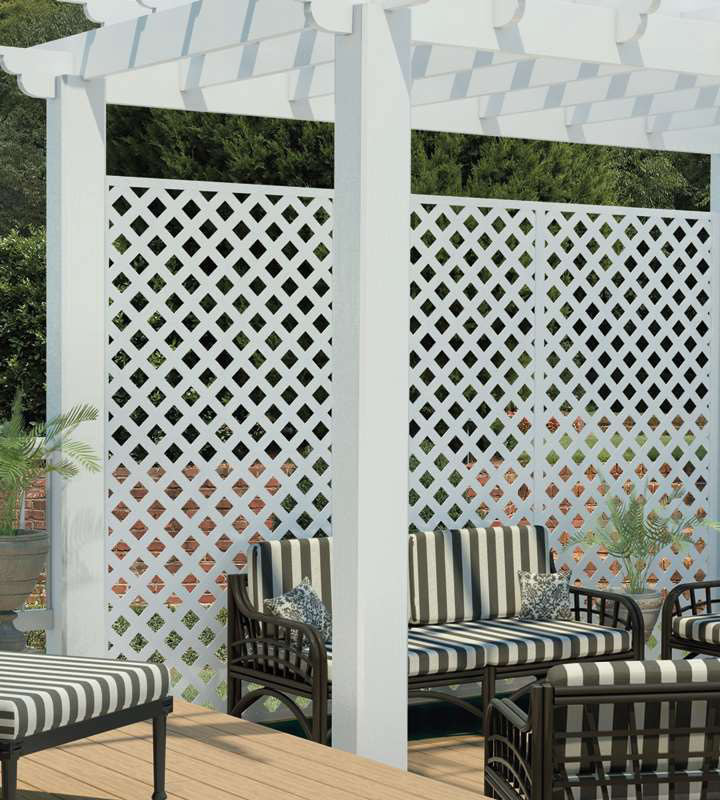
Lattice panels are used for deck skirting to enclose the space below a deck, privacy screens between properties or on patios, garden structures including arbours and trellises, decorative fence infill, and plant support structures. Their open pattern provides visual screening while allowing airflow.
What materials are lattice panels available in at Windsor Plywood?
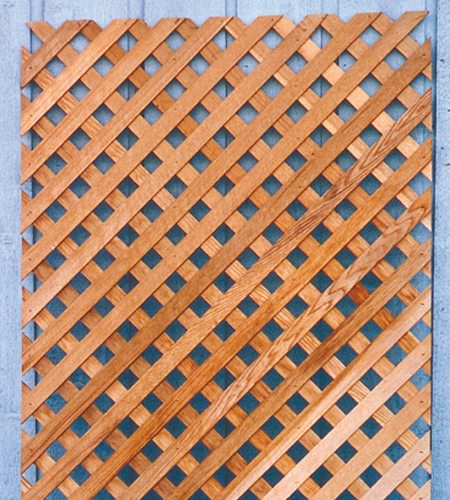
Windsor Plywood carries lattice panels in wood and in vinyl and PVC options. Wood lattice has a natural aesthetic and accepts paint or stain. PVC and vinyl lattice are maintenance-free, will not rot or splinter, and are the better choice for permanently installed applications where longevity matters more than the natural wood look.
What spacing is standard for lattice panel openings?
Standard lattice patterns come in 1.5-inch and 3-inch diagonal or square grid patterns. Smaller 1.5-inch patterns provide more visual screening and a finer texture. Larger 3-inch patterns are more open, allow more light and airflow, and have a more rustic character. Both are readily available at Windsor Plywood.
Can lattice panels be used as a privacy screen on a deck?
Yes. Lattice panels work well as partial privacy screens when mounted in a frame between posts on a deck perimeter. They provide visual screening without completely blocking airflow or light. For more privacy, orient the lattice vertically to align the diagonal strips for denser coverage, or use a smaller pattern opening.
How do I frame and install lattice panels?
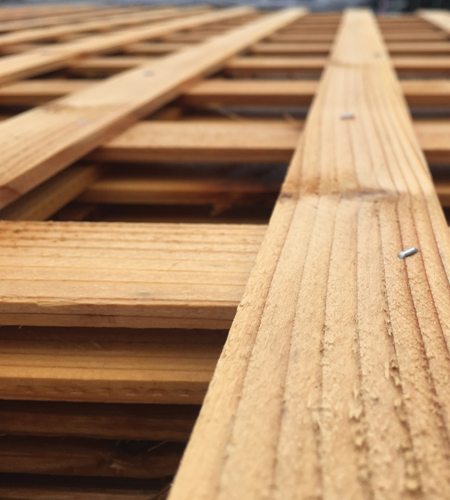
Lattice is thin and flexible on its own and should always be installed in a supporting frame of 2x lumber or routed frame stock. The panel sits in a groove or rabbet cut into the frame members and is secured with trim moulding or quarter round on both faces. The frame carries all structural load and the lattice itself is the infill panel only.